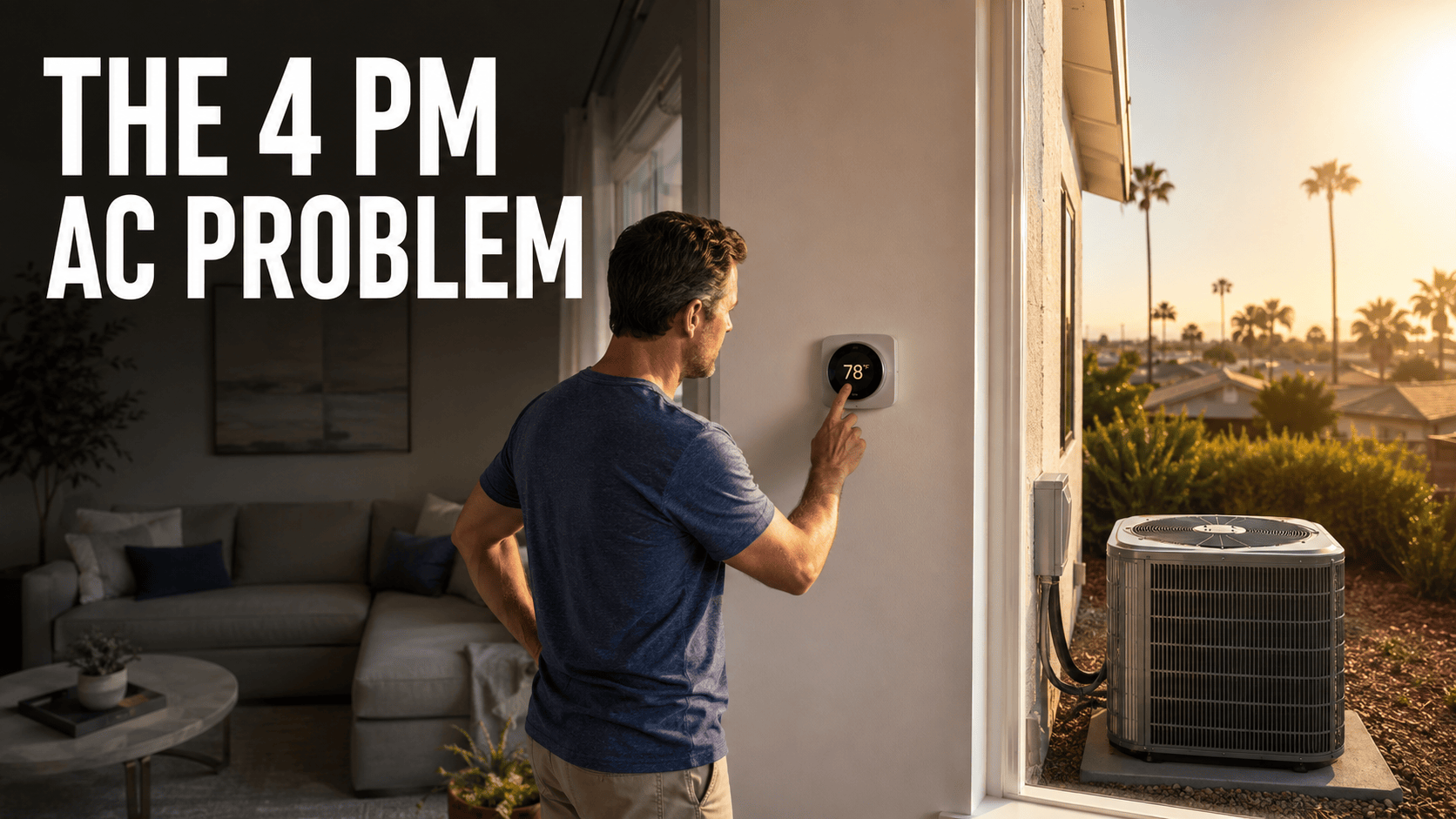
By August, your air conditioning system has already been through months of heavy use. In Southern California, that can mean hundreds of hours of operation during some of the hottest days of the year.
And this is exactly when many homeowners notice something strange: the AC is still running, but the house doesn’t feel as comfortable as it did earlier in the summer.
Maybe it takes longer to cool down. Maybe certain rooms feel warmer. Or perhaps the system seems to run almost constantly.
These problems don’t always mean your air conditioner is about to fail. But they can be early signs that your system needs attention.
Months of Continuous Operation Take a Toll
During a Southern California summer, an AC system may operate for many hours every day. Over time, even relatively small issues can begin affecting performance.
A slightly dirty coil, restricted airflow, a weak capacitor, an aging motor, or a refrigerant-related issue may not immediately stop the system from working.
Instead, the AC gradually becomes less efficient.
That means the system may still produce cool air while using more energy and taking longer to reach the temperature set on your thermostat.
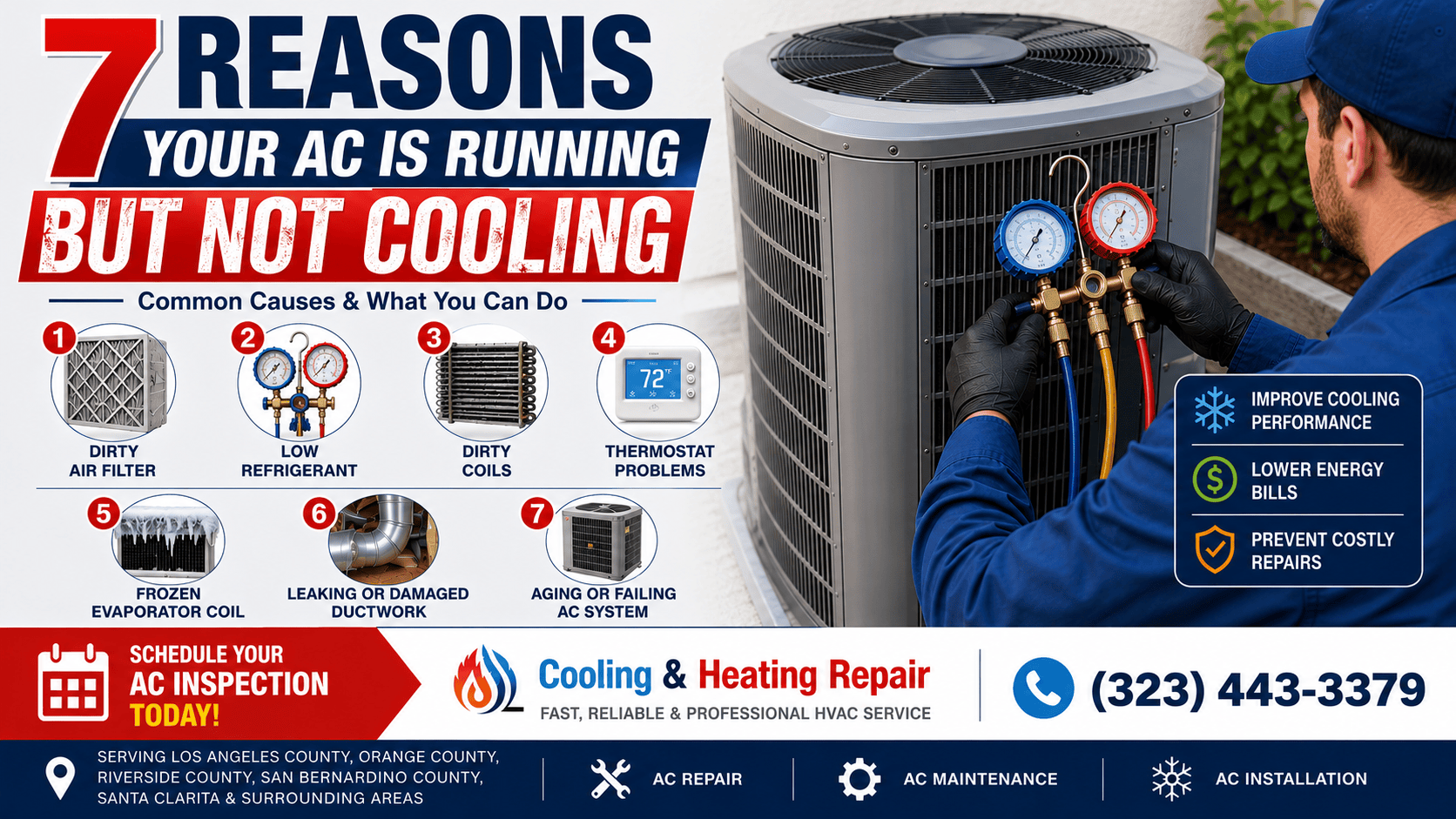
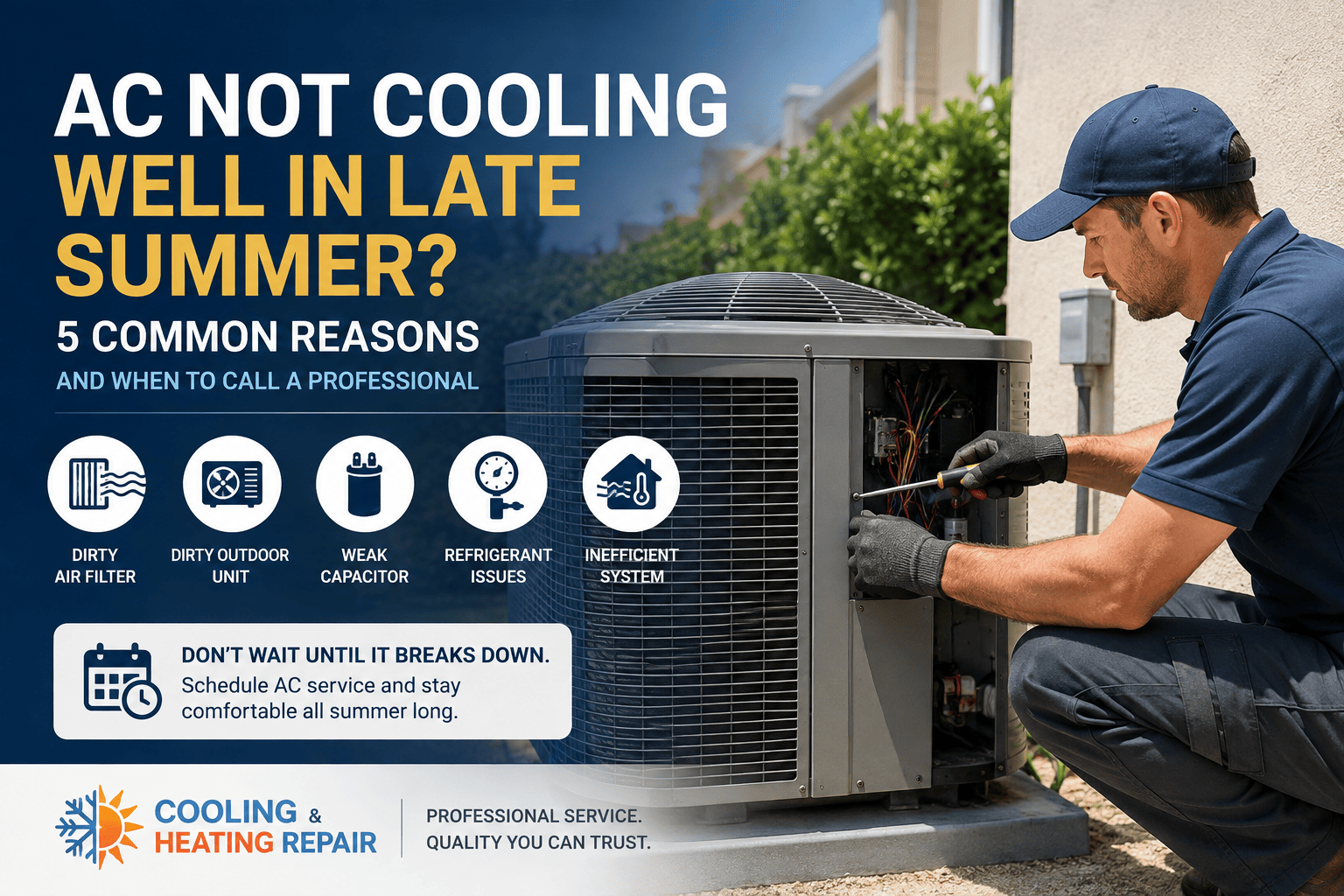
1. Your Air Filter May Be Restricting Airflow
One of the simplest problems is also one of the most common.
A dirty air filter restricts airflow through the HVAC system. When your AC cannot move enough air, cooling performance can drop and the system may have to run longer.
If your system has been operating heavily throughout the summer, it’s worth checking the filter even if you replaced it earlier in the season.
Homes with pets, construction dust, open windows, or high HVAC usage may need filter replacement more frequently.
2. The Outdoor Condenser Has Been Working Through the Hottest Months
Your outdoor AC unit releases heat collected from inside your home.
Because it sits outside, dirt, dust, leaves, vegetation, and other debris can accumulate around the condenser.
When airflow through the outdoor coil becomes restricted, the system may have difficulty releasing heat efficiently.
This can reduce cooling capacity and increase stress on important components.
3. A Weak Capacitor Can Cause Intermittent Problems
Capacitors help HVAC motors start and operate correctly.
As capacitors age, they can weaken gradually rather than failing immediately.
This is why some homeowners experience unusual symptoms such as:
- AC taking longer to start
- Outdoor unit occasionally not turning on
- Humming sounds
- System shutting down unexpectedly
- AC working normally one day and poorly the next
A professional HVAC technician can test electrical components and determine whether they are operating within the manufacturer’s specifications.
4. Refrigerant Problems Can Reduce Cooling Performance
Your air conditioner does not normally “use up” refrigerant.
If the refrigerant level is incorrect, there may be another issue that needs to be diagnosed.
Possible symptoms include weak cooling, unusually long operating cycles, ice forming on components, or a noticeable difference between normal system performance and what you’re experiencing now.
Simply adding refrigerant without determining why the system is low may not solve the underlying problem.
5. Your AC May Be Working — Just Not Efficiently
One of the biggest misconceptions about HVAC systems is that they are either working or broken.
In reality, there is a large middle ground.
An AC system can continue cooling your home while operating inefficiently because of airflow problems, dirty components, electrical issues, aging parts, incorrect refrigerant charge, or other conditions.
The homeowner may first notice the problem through longer cooling cycles or higher electricity bills.
Why Late-Summer AC Problems Shouldn’t Be Ignored
Small HVAC problems can sometimes become expensive repairs when the system continues operating under additional stress.
For example, poor airflow can affect temperatures throughout the system. A weak electrical component can place additional strain on a motor. A system that runs continuously may experience considerably more wear than one operating normally.
Finding the cause early can sometimes prevent an unexpected breakdown during another hot day.
Should You Repair or Replace the System?
Not every poorly performing AC needs replacement.
The right decision depends on several factors, including:
- Age of the equipment
- Overall condition
- Repair history
- Cost of the current repair
- Energy efficiency
- Refrigerant type
- Comfort problems inside the home
- Expected remaining service life
At Cooling & Heating Repair, our technicians inspect the system and explain what they find before recommending the appropriate solution.
If a repair makes sense, we’ll explain the repair.
If the equipment is approaching the end of its useful life and replacement may be the better long-term option, we’ll explain that as well.
Professional AC Service in Southern California
Cooling & Heating Repair provides professional air conditioning repair, maintenance, diagnostics, and installation services throughout Southern California.
Whether your AC has stopped working completely or you’ve simply noticed that it isn’t cooling like it used to, our technicians can inspect the system, identify the problem, and discuss your options.
Don’t wait until a small cooling problem turns into a complete breakdown.
Need AC service? Contact Cooling & Heating Repair to schedule an appointment.